Rugby, Coventry, Birmingham, Walsall and Stafford
Recovery requests around the M1, M42, Birmingham junctions, M5, M54, Stafford and the main M6 or M6 Toll split.
Quote in less than 5 minutesAnswer basic questions in around 2 minutes. Our team replies after you submit your request.Start the quote chat
Broken down on the M6? Request M6 car recovery, van recovery, motorbike recovery, accident recovery or emergency vehicle towing near Rugby, Coventry, Birmingham, Walsall, Stafford, Stoke-on-Trent, Crewe, Warrington, Wigan, Preston, Lancaster, Kendal, Penrith and Carlisle. Send your direction, destination and vehicle condition for a clear price and estimated arrival time before dispatch. If you do not know the junction or postcode, the quote assistant can add your phone’s exact Google Maps location.
Keep your hazard lights on, stay belted if you cannot safely leave the vehicle and call 999 immediately. Arrange private recovery only after police or traffic officers have made the scene safe.
One dedicated north–south motorway page
The M6 begins at Catthorpe Interchange near Rugby, where it meets the M1 and A14, serves the West Midlands and north-west England, then continues through Cumbria to the A74(M) at Junction 45 near Gretna. Drivers joining or leaving at Catthorpe can also use our dedicated M1 motorway recovery page. Every request is priced from its exact pickup point, destination, vehicle condition and equipment needs.
Recovery requests around the M1, M42, Birmingham junctions, M5, M54, Stafford and the main M6 or M6 Toll split.
Coverage around the A500, Cheshire junctions, M56, M58, M65, M61 and the Preston and M55 approaches. For the Junction 21A connection, see our M62 motorway recovery page.
Requests along the northern M6 through Lancaster, the A590 and Kendal corridor, Shap, Penrith, Carlisle and the A74(M) connection.
M6 at a glance
Official-source figures with their location and year. Traffic varies along the road.
Traffic figures describe a named section in both directions, not unique vehicles using the entire motorway or a live count for today. Mapped lengths can include branches and differ from a single end-to-end journey. Read the route and data notes · Recovery price guide
Quote in less than 5 minutes
Chat with our quote assistant. It takes around 2 minutes to answer a few basic questions. Our team will contact you with a quote in less than 5 minutes after you submit your request.
Share your location and vehicle details. Our recovery team confirms your price and estimated arrival time before booking.
Answer a few basic questions in around 2 minutes. Our team will contact you with a quote in less than 5 minutes after receiving your request.
Loading your quote assistant… If it does not appear, please refresh this page.
Junction-by-junction coverage
Recovery requests near Rugby, the M1 and A14 connection, the M69 at Junction 2, Coventry, Nuneaton and the M42 interchange. The separately signed M6 Toll branches at Junction 3A.
Coverage around Birmingham, the A38(M), M5, Walsall, M54, Cannock, Hilton Park services and the point where the M6 Toll rejoins at Junction 11A.
Requests around the A5, Stafford, Stafford services, Stoke-on-Trent, Keele services, the A500 and Crewe approach.
Recovery near Sandbach and Knutsford services, the M56 connection, Lymm, Warrington and the major M62 interchange.
Coverage around Haydock, Wigan, the M58, Charnock Richard services, Leyland, the M65 and M61 connections south of Preston.
Requests around Preston, the M55 route to Blackpool, Lancaster services, Carnforth, Burton-in-Kendal services and the A590 corridor.
Recovery across the Cumbrian section near Killington Lake, Kendal, Tebay services, Shap and the A66 interchange at Penrith.
Coverage around Southwaite services, Carlisle junctions and the northern end of the M6 where the route continues towards Scotland as the A74(M).
Signed services along the M6
M6 service areas include Rugby, Corley, Hilton Park, Stafford, Keele, Sandbach, Knutsford, Lymm, Charnock Richard, Lancaster, Burton-in-Kendal, Killington Lake, Tebay, Southwaite and Todhills. Burton-in-Kendal is northbound-only and Killington Lake is southbound-only, so the direction matters. If you are safely parked at services, send the site name, your position in the car park and whether you arrived northbound or southbound.
If you are still on the motorway, do not walk beside traffic to find an address and do not place a warning triangle on the carriageway. From a safe position, share northbound or southbound, the nearest junction, emergency-area number, driver-location sign or marker-post details. Once you are in a place of relative safety, National Highways can be contacted on 0300 123 5000.
For official instructions, read the National Highways motorway breakdown guidance and the Highway Code rules for motorway breakdowns. Before travelling, you can also check National Highways live travel updates.
The M6 Toll is a separate charged route around Birmingham. Check the official M6 Toll junction map and route information if you are unsure whether you are on the main M6 or the M6 Toll.
Recovery matched to your vehicle
Searching for M6 recovery near you does not require a local postcode. Share your map pin, direction and nearest junction if known so Motorway Response can check suitable recovery availability along the route. Vehicle size, wheel damage, loading condition and destination are confirmed before a price and ETA are provided.
Flatbed transport after a mechanical fault, warning light, overheating problem, clutch or gearbox issue, battery problem or another failure that makes the car unsafe to drive.
Provide the van make, model, body length, approximate load and running condition. SWB, MWB and LWB vans can require different payload capacity and loading equipment.
Motorcycles and scooters need secure wheel support and suitable restraint points. Share the bike model, damage, key availability and exact pickup position before dispatch.
Tell us if the vehicle is electric or hybrid, whether it selects neutral and whether any wheels are locked. This helps check a suitable flatbed and loading method.
A damaged tyre, alloy, suspension component or locked wheel may prevent normal loading. Photos can help identify whether skates, winching equipment or another method is required.
Accident-damaged vehicles can be considered once the scene is safe. If the vehicle does not drive, the assistant asks whether it rolls, selects neutral and releases the handbrake.
From request to M6 recovery
Send direction, junction, services, marker information or a map pin from a safe place.
Tell us its type, loading condition, wheel damage and whether it drives.
Suitable availability is checked before the recovery price and estimated arrival time are confirmed.
The assigned operator receives the pickup and destination details required for attendance.
Clear information before dispatch
Motorway Response checks suitable operator availability and confirms the quoted price and estimated arrival time before dispatch. No payment is taken through the quote chat.
The route from your exact M6 position to the requested garage, home, storage site or other safe destination is the main part of the journey calculation.
Cars, motorbikes, SUVs and vans need different capacity. Locked wheels, steering damage, low ground clearance and accident damage may require extra loading equipment.
A service area or safe off-motorway pickup is different from an exposed roadside position. A live-lane incident must first be handled by the emergency services.
Congestion, closures, weather, time of day and the live position of an appropriate recovery truck can change the estimated arrival time.
Genuine recovery photographs
These 10 original photographs show cars, SUVs and vans prepared for flatbed transport. They demonstrate the vehicle types and loading details considered when arranging M6 motorway recovery; they are not presented as recoveries completed on the M6.
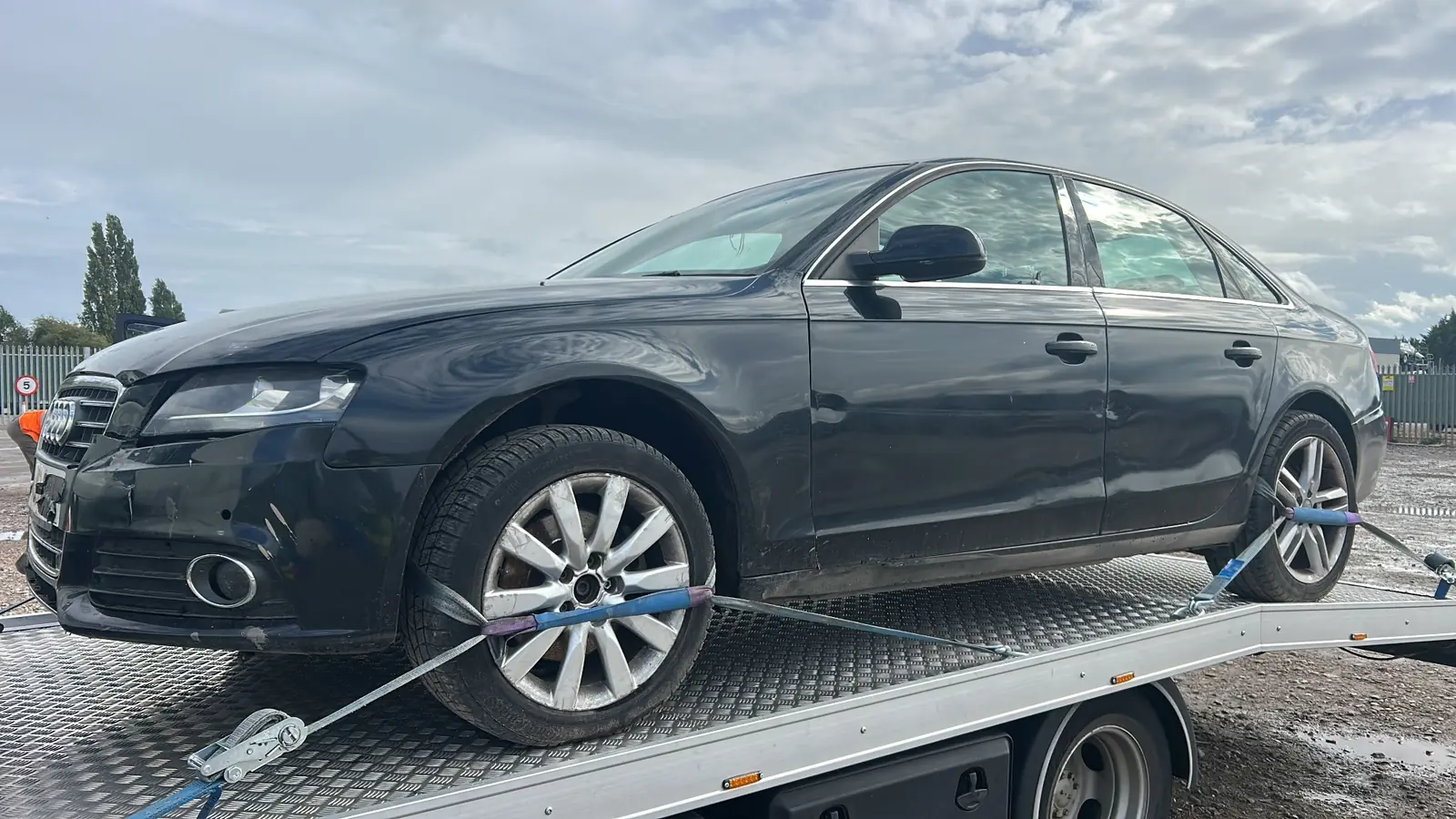
This Audi A4 is secured on a flatbed with visible front-end damage. Wheel condition, steering and loading access are checked before suitable M6 recovery equipment is arranged.
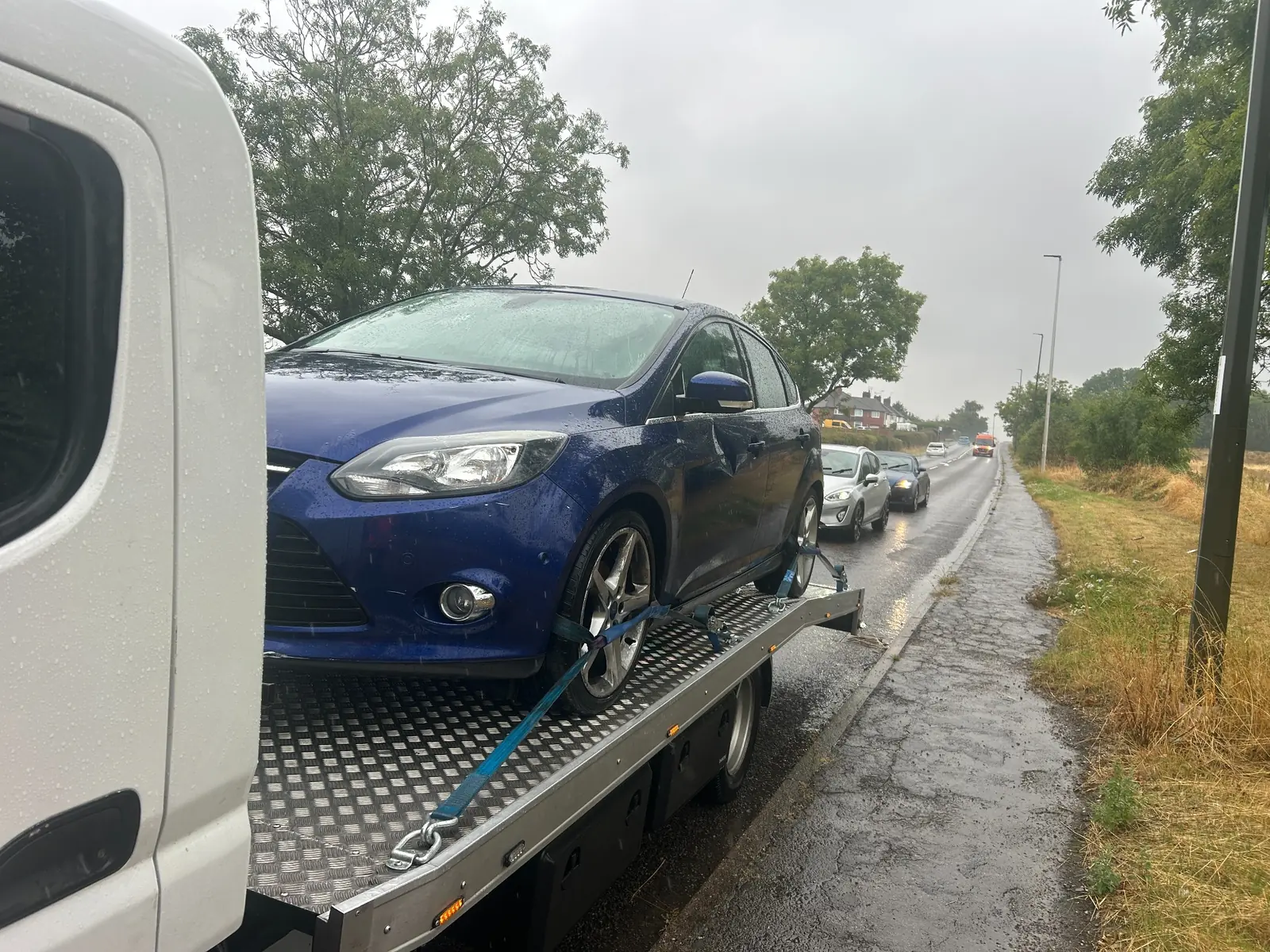
This Ford Focus is secured beside a rain-soaked road. Accurate M6 location details and a safe stopping place are important before a flatbed is dispatched.
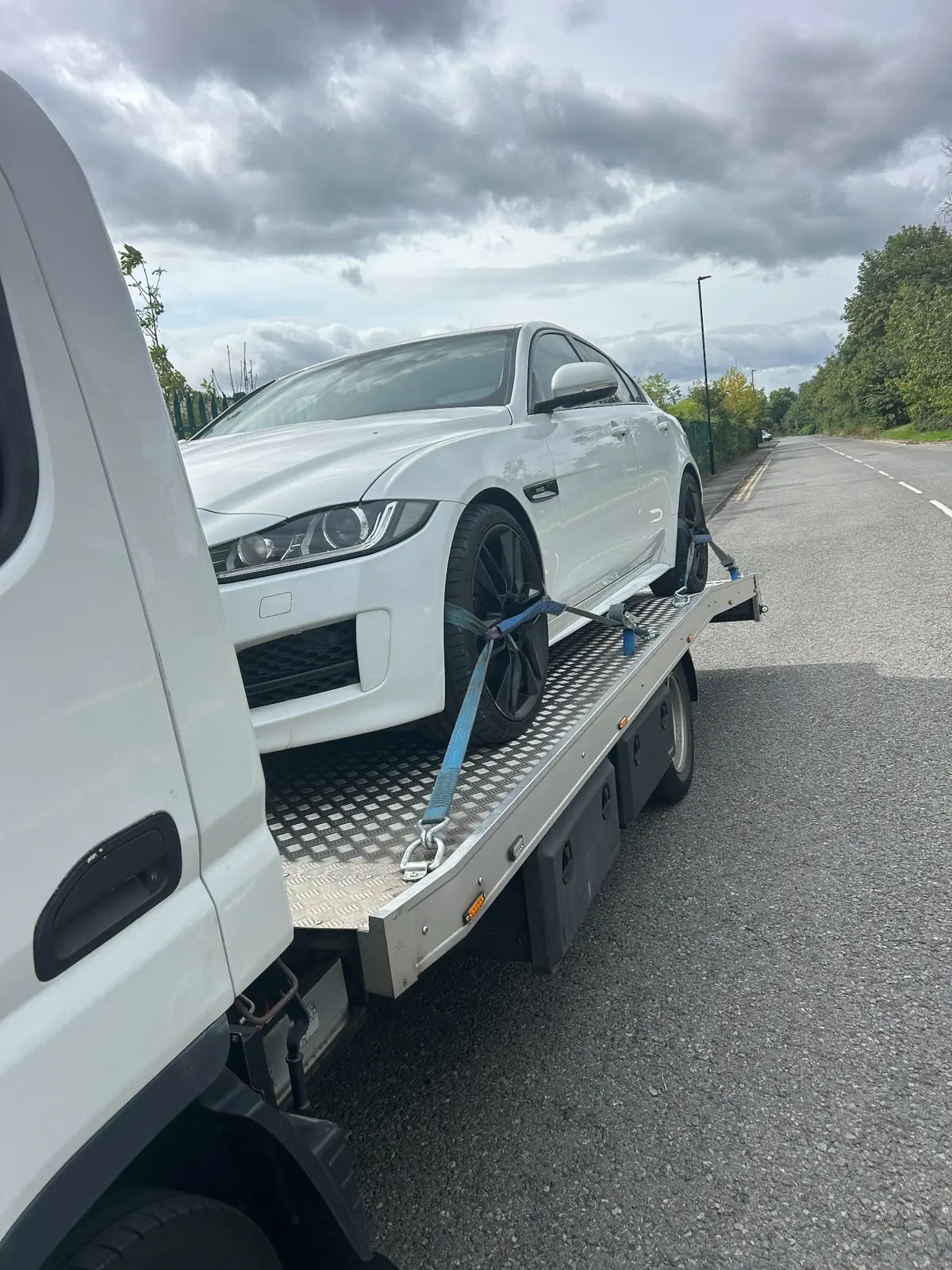
Low-profile saloons need careful ramp alignment and clear loading information so an appropriate M6 recovery truck can be selected.
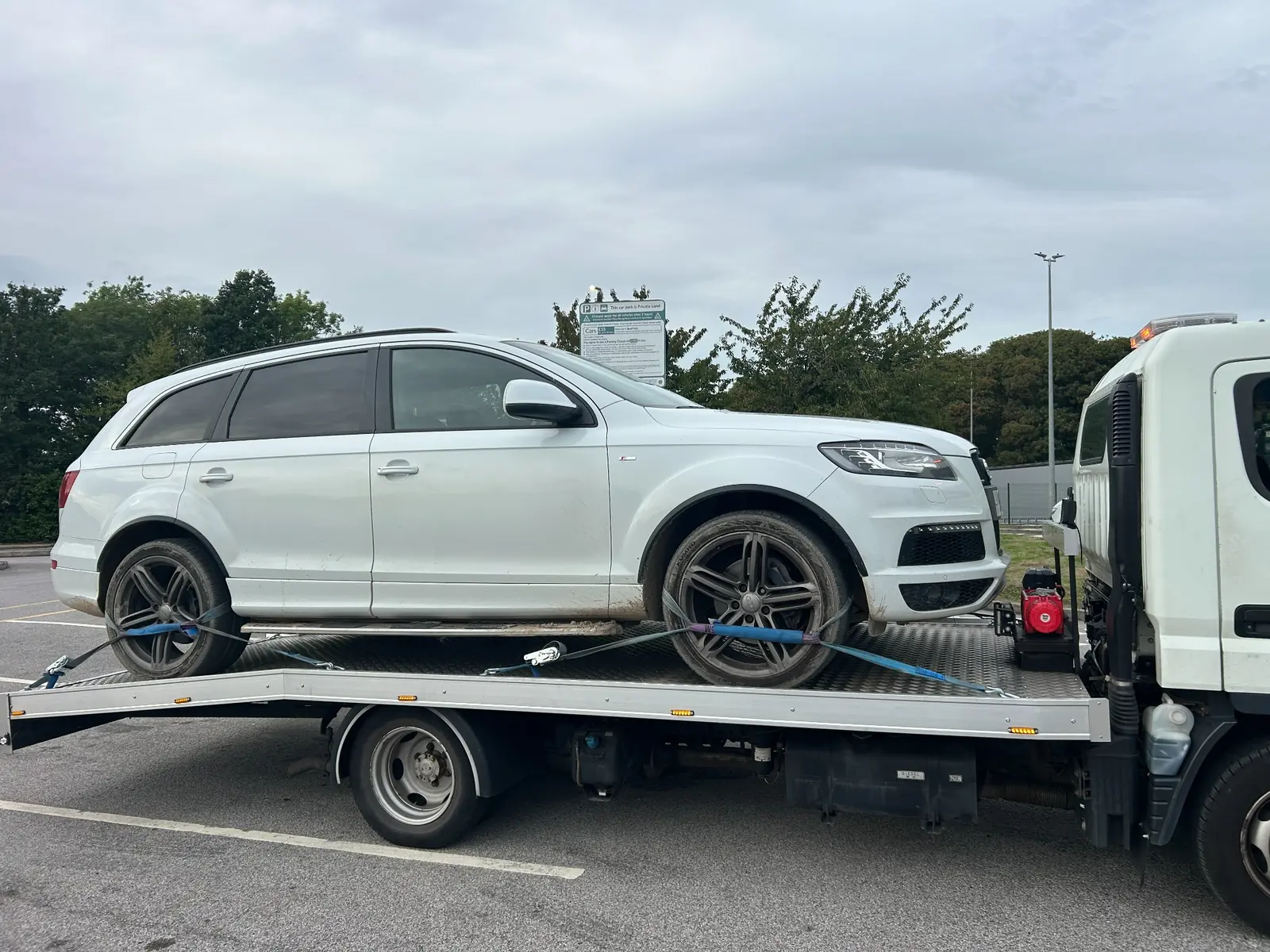
Larger SUV recovery requests require the vehicle size, wheel condition and running status to be checked before M6 dispatch.
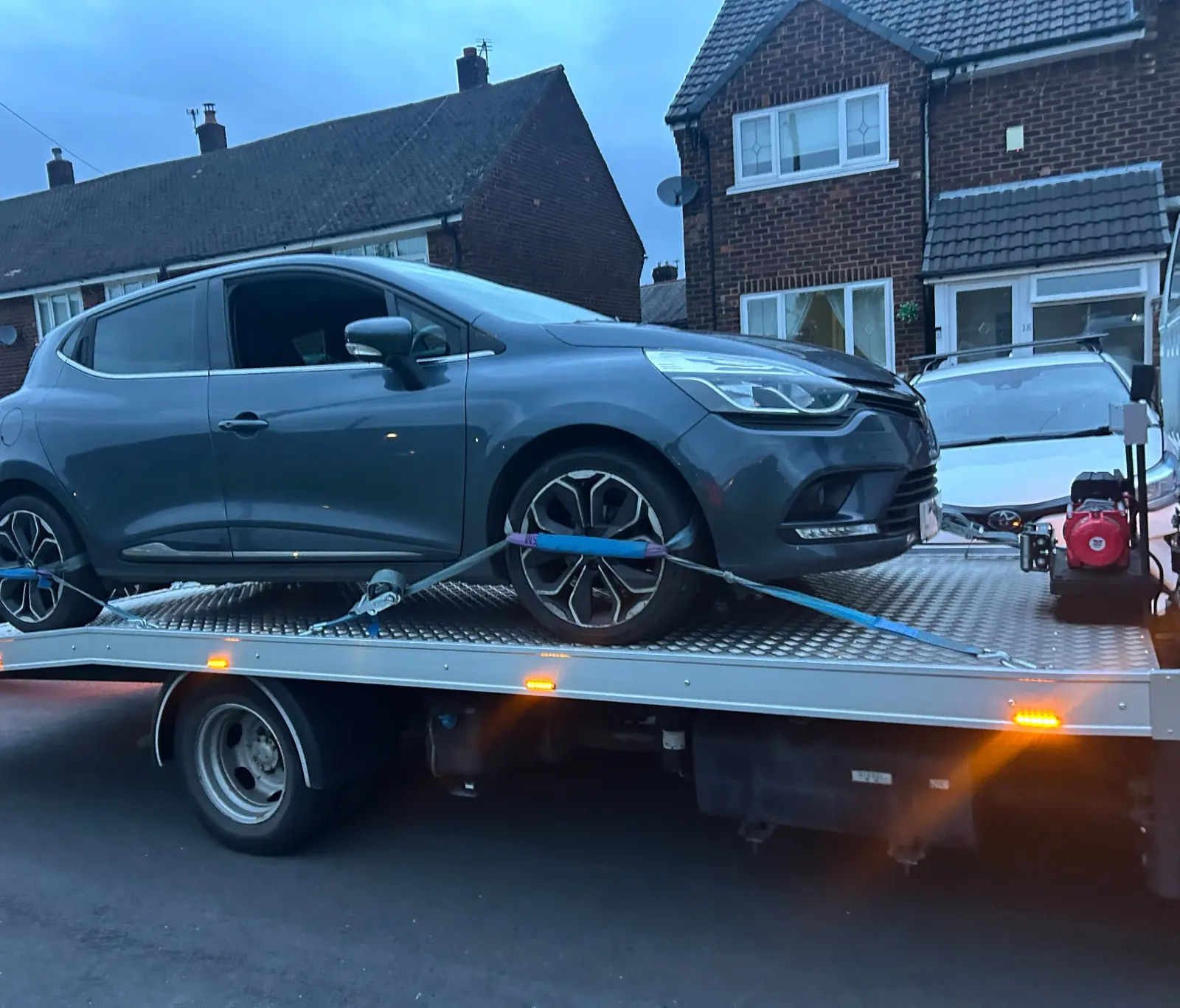
Evening M6 requests still need the exact pickup point, destination and vehicle condition before a price and estimated arrival time can be confirmed.
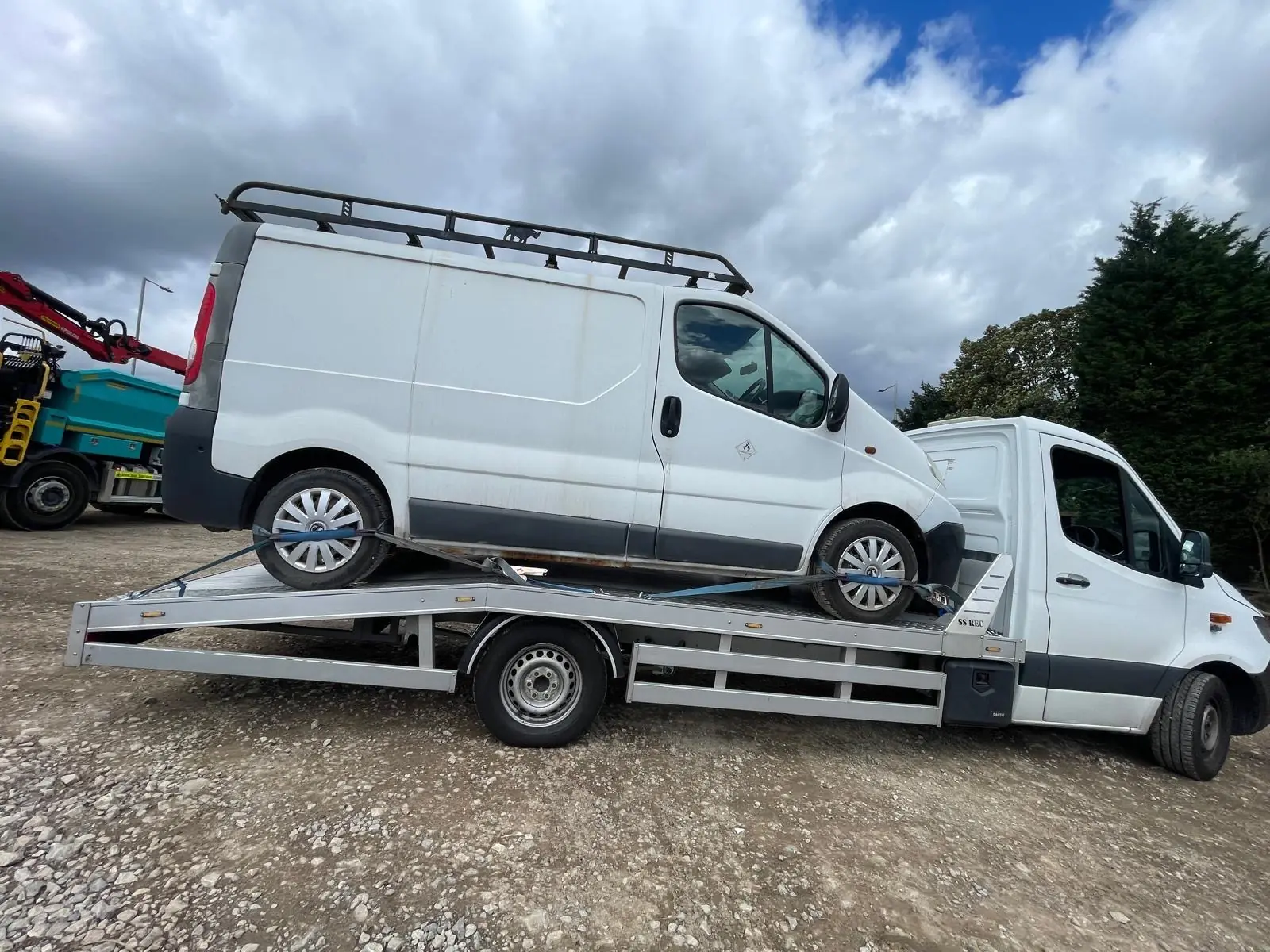
Van recovery is assessed using body length, load, vehicle weight and whether the van rolls safely for flatbed loading.
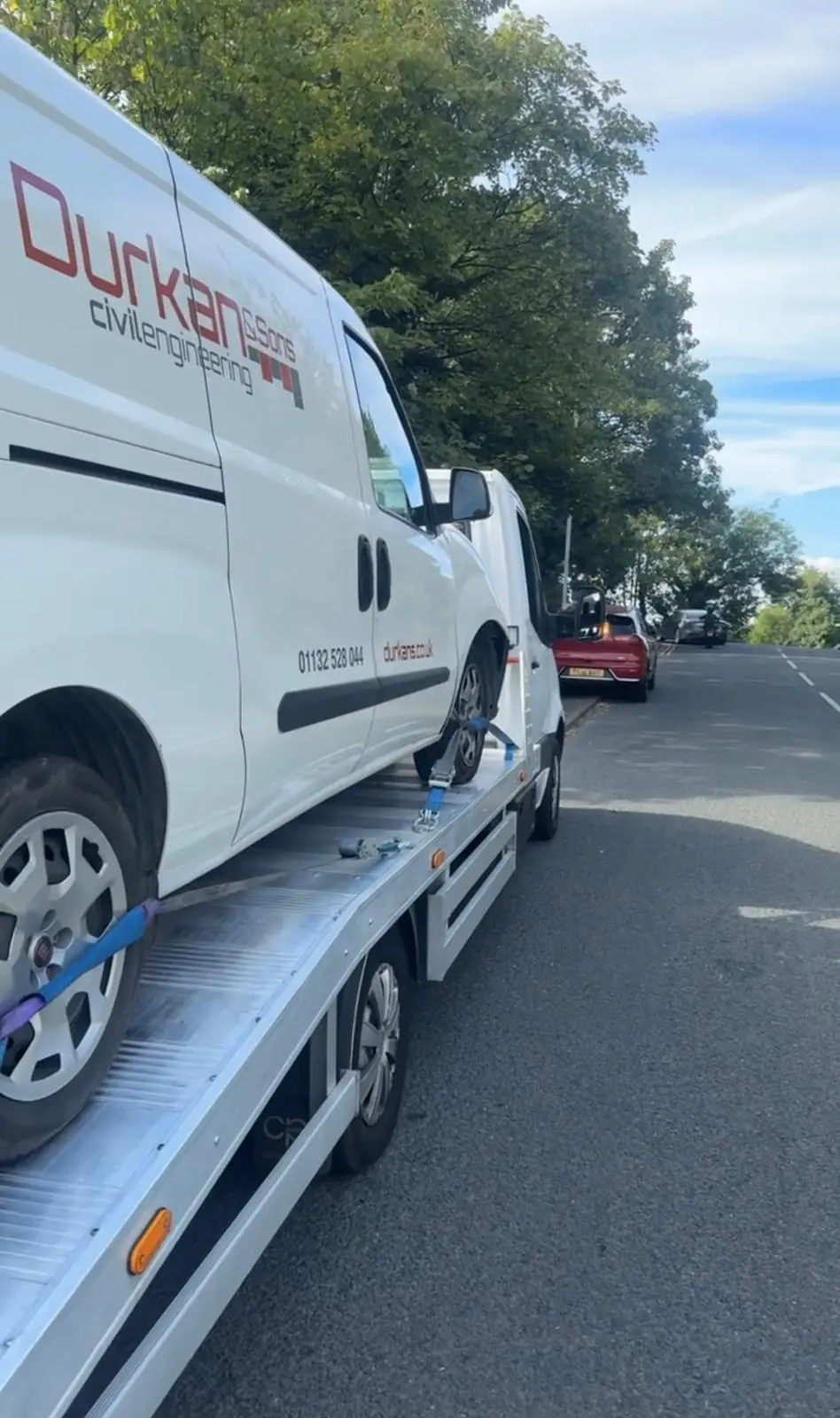
Sharing the van make, model, load status and wheel condition helps identify suitable M6 recovery equipment before dispatch.
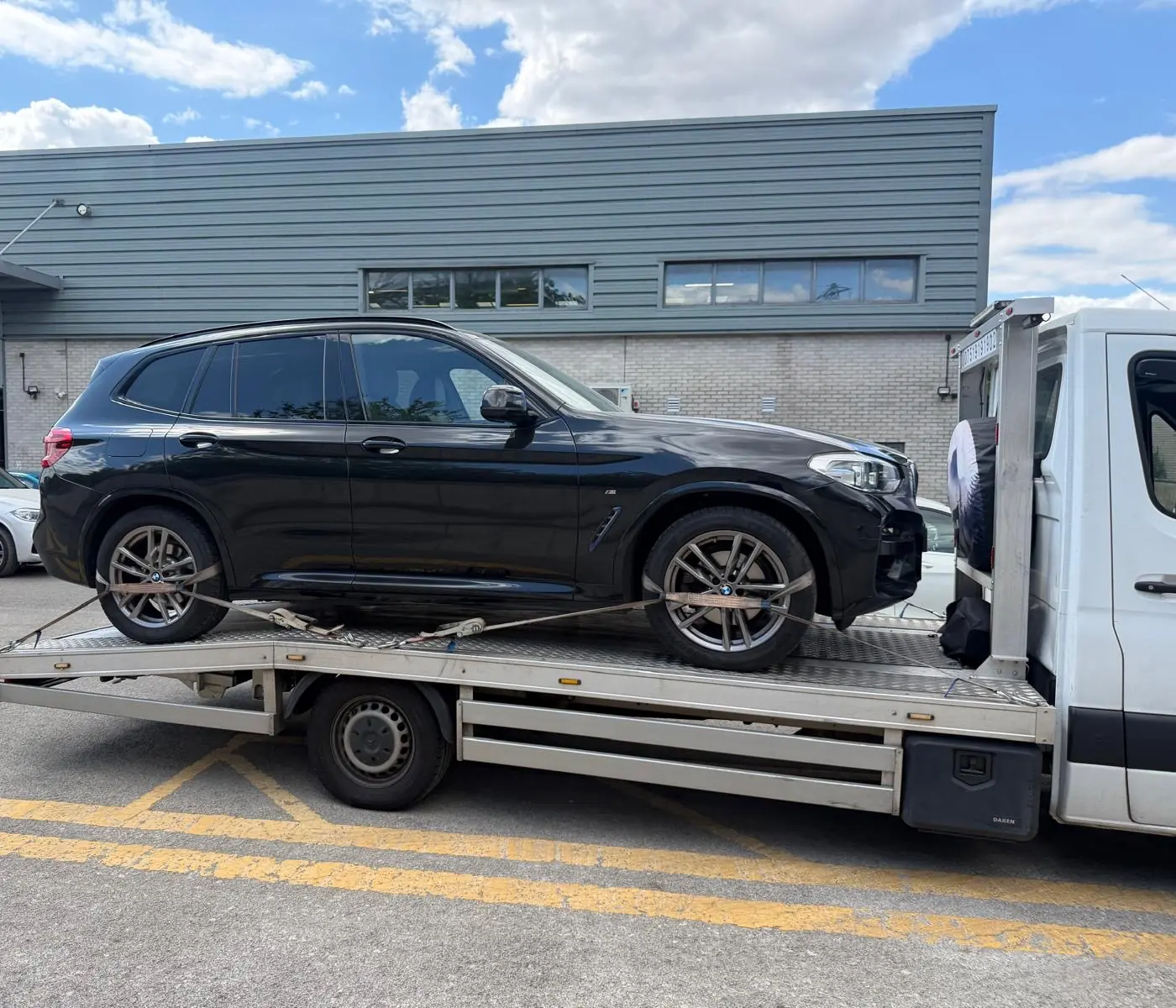
For SUV recovery, wheel restraint, vehicle dimensions and safe access all form part of the loading assessment.
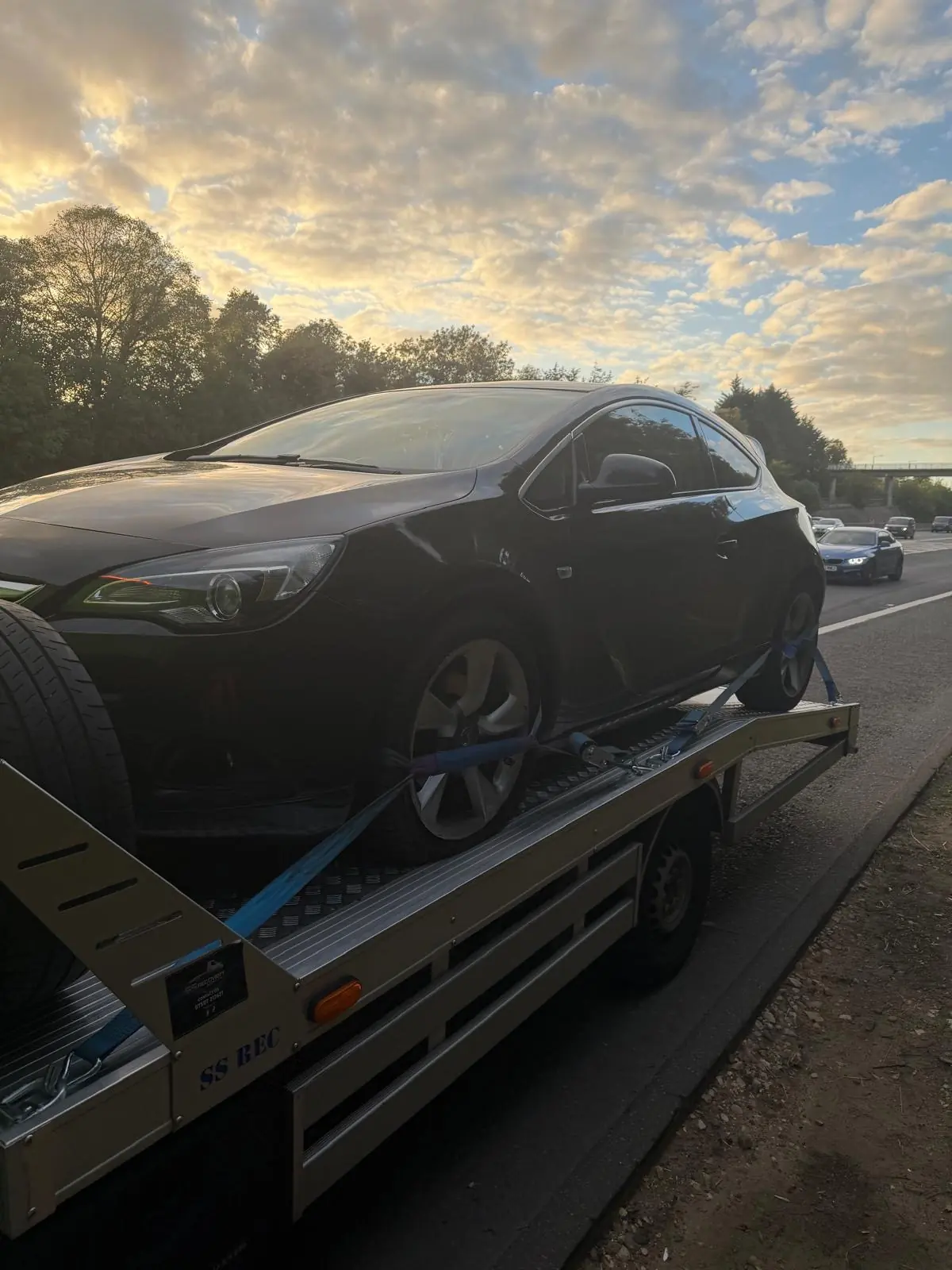
Roadside recovery is quoted after checking traffic-side safety, the precise M6 location and whether the car can roll and steer.
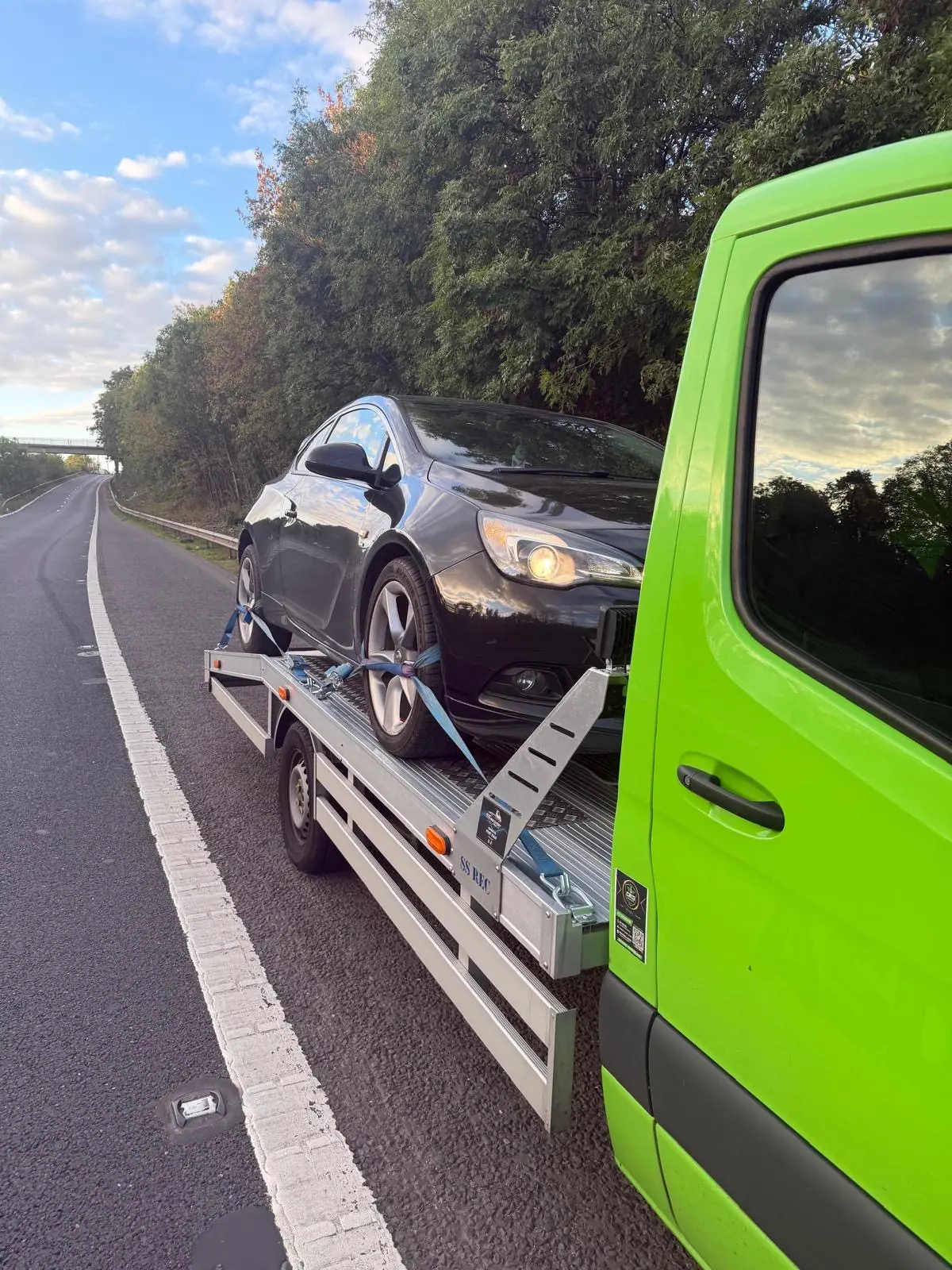
If a vehicle stops beside the M6, Motorway Response first needs confirmation that it is away from a live lane and safe for private recovery.
All 10 photographs are genuine examples of recent Motorway Response flatbed transport work. Equipment and truck type depend on the vehicle, access, wheel condition and operator availability.
M6 recovery questions
You can submit a request for a safe location from Rugby through Birmingham and north-west England to Carlisle and the A74(M) connection near Gretna. Attendance depends on your exact position, vehicle and suitable operator availability.
No. The M6 Toll is separately signed around the north and east of Birmingham. Tell us whether you are on the main M6 or M6 Toll and send the nearest junction or services.
Send northbound or southbound, nearest junction or services, exact pickup position, destination, vehicle details, wheel condition and whether the vehicle drives for loading.
From a safe place, tap Get my current location in the quote assistant and allow location access. A Google Maps pin will be added to the request. If known, also select northbound or southbound and provide the nearest junction, services or emergency-area number.
Often yes, but explain the damage before dispatch. Photos may be requested so suitable skates, winching equipment or another recovery method can be checked.
An ETA is provided only after checking a suitable operator's live location and availability. M6 traffic, closures, scene safety and equipment requirements may affect arrival.
Keep your hazards on, remain belted if you cannot safely leave the vehicle, call 999 and ask for the police. Do not wait in a live lane for private recovery.
Explore dedicated motorway pages
Each route page contains its own junction, direction, service-area and recovery guidance. Use the page that matches the motorway shown on your road signs.
Safe and ready to request help?
A closer look at M6
The M6 route serves the Rugby, Birmingham, Stoke-on-Trent, Preston, Lancaster, Carlisle corridor in England. The M6 and M6 Toll are separate routes. Tell us which road you are on, particularly around the Birmingham junctions, before an operator is assigned. A route page identifies the road to request; the precise collection still depends on the direction, actual carriageway and stopping position. A services name should include the side of the motorway, while a slip-road pickup needs its own location.
For car recovery, van recovery, SUV transport or motorcycle collection, send your current map pin from a place of relative safety if you can. Add the nearest junction or a driver location sign only when it is already visible. Do not walk along the motorway to find a postcode, inspect the vehicle or get a better photograph. A town beyond the next exit can help describe the journey, but it does not identify your pickup carriageway.
The cited source gives approximately 379.8 km (236 miles). Approximate M6 route distance published by Highways England in 2020. This preserves the rounded distance and endpoint description used by that named official publication; it is not a 2025 survey or an exact driving-distance calculation. Other publications use different rounded distances.
Highways England press release dated 23 October 2020 states 236 miles from Rugby in Warwickshire to the Scottish border. Kilometres converted at 1 mile = 1.609344 km. A recovery journey also includes the approach to the correct carriageway and the onward delivery route, so the motorway’s length is not the mileage automatically used for your quote.
At junction 19 to M56(9), the official 2025 annual average daily flow is 113,562 motor vehicles across both directions. Of these, 72,589 are cars and taxis. The record is labelled Counted, count point 46024.
Annual average daily flow at this named count point, all directions combined, for 2025. This is not a live count, a count of unique cars across the whole motorway, or the number using the entire route in a particular 24 hours. Cars and taxis are a subset of all motor vehicles; flows from different count points have not been added together. DfT individual-link estimates are less robust than regional and national totals; the estimation method is shown. It should not be added to figures from other points to estimate unique motorway users: the same vehicle may pass several counters. Traffic volume alone also cannot predict your recovery truck’s arrival time. Understand daily traffic counts and road lengths.
Tell the team the make and model, transmission type, whether it runs and drives for loading, and whether any wheels are damaged, missing or locked. Known details about rolling, neutral and handbrake release help assess a non-runner. Do not test these beside traffic. A loaded van, large 4×4, low car or vehicle after a collision can need a different truck and securing method from a freely rolling small car.
Share the full destination address or postcode, passenger count and any known access restrictions. Recovery to a local garage and long-distance vehicle transport are different journeys. Suitable equipment, safe access, passenger space and available operators are checked before booking. Any change to your location, damage or destination should be reported before dispatch.
Vehicle, route and equipment
A M6 car recovery quote near Rugby starts with the exact stopping point, destination and vehicle condition. The following overlapping examples explain our indicative pricing. They are not a fixed tariff, an all-inclusive package or a promise that every job will fall within the range.
| Indicative band | Example work assessed | What can change the quote |
|---|---|---|
| £120–£220 | Straightforward short-distance car collection from a safe, accessible pickup | Actual route, call-out timing, access and vehicle loading |
| £220–£350 | Longer car transport or a larger vehicle on an agreed route | Distance, weight, onward destination and operator availability |
| £350–£450 | Some van or SUV recoveries, or jobs needing additional loading equipment | Van size and load, locked wheels, ground clearance and damage |
| £450–£550 | Some longer-distance recoveries or more demanding transport arrangements | Overall journey, specialist handling and safe scene access |
These are examples rather than strict vehicle categories. A small car on a long route can cost more than a nearby SUV. Long-distance, heavy, complex, accident or specialist jobs can exceed £550. Tell us about a loaded van, trailer, missing keys, locked wheels or passengers before booking. The team confirms the actual price, scope and estimated arrival time before dispatch.
Police-arranged or statutory removal, storage, road-operator arrangements and any separately agreed charges are different from this private quote guide. Existing breakdown cover may also change who you should contact. Read the complete motorway recovery price guide or request a personal quote.
Route facts and practical help
Our indicative private recovery examples run from £120 to £550, depending on the actual route, vehicle size and condition, access and loading equipment. These are not fixed prices or a maximum; long-distance or specialist work can cost more. Your price and arrival estimate are confirmed before dispatch.
At junction 19 to M56(9), the official 2025 annual average daily flow is 113,562 motor vehicles across both directions. Of these, 72,589 are cars and taxis. The record is labelled Counted, count point 46024. The figure is not a total of unique vehicles using the whole motorway or today’s live flow.
Do not attempt a wheel change or other DIY repair beside motorway traffic. If you cannot reach safety or leave safely, keep your belt and hazards on and call 999 for the police. From a place of relative safety, contact the road operator or a recovery company and follow their instructions.
Practical recovery advice
Understand indicative motorway recovery prices from £120 to £550, what changes a towing quote, and how cars, vans, distance and loading affect the cost.
Read the guide ↗Motorway recovery guideUnderstand the Highway Code advice on hard-shoulder car repairs, the legal stopping rules, and when to contact police, the road operator or recovery.
Read the guide ↗Motorway recovery guideFlat tyre or blowout on a motorway? Read safe stopping advice, when to call 999, why to avoid a DIY wheel change and what to tell a recovery company.
Read the guide ↗Road facts & trafficUnderstand UK motorway daily traffic figures, cars and taxis, count locations and mapped road lengths. Read official-data notes before planning a recovery.
Read the guide ↗