
Thurcroft, Hellaby, Rotherham and Maltby
Recovery requests near the M1 junction 32 interchange and M18 junction 1 for the A631, serving the Rotherham, Bramley, Hellaby and Maltby areas.
Quote in less than 5 minutesAnswer basic questions in around 2 minutes. Our team replies after you submit your request.Start the quote chat
Broken down on the M18? Request M18 car recovery, van recovery, accident recovery or emergency vehicle towing near Rotherham, Doncaster, Armthorpe, Hatfield and Thorne. Send your direction, nearest junction, destination and vehicle condition for a clear recovery price and estimated arrival time before dispatch.
Keep your hazard lights on, stay belted if you cannot safely leave the vehicle and call 999 immediately. Arrange private recovery only after police or traffic officers have made the scene safe.
One dedicated motorway page
The M18 runs for approximately 26 miles from the M1 at Thurcroft, east of Rotherham, through the Doncaster area and towards the M62 near Rawcliffe and Goole. Every recovery request is checked individually using the exact pickup point, destination, vehicle condition and loading equipment required.
Recovery requests near the M1 junction 32 interchange and M18 junction 1 for the A631, serving the Rotherham, Bramley, Hellaby and Maltby areas.
Breakdown and towing requests around junction 2 for the A1(M), junction 3 for the A6182 and junction 4 for the A630 and Doncaster.
Coverage around junction 5 for the M180, junction 6 for the A614 and junction 7 where the M18 meets the M62.
M18 at a glance
Official-source figures with their location and year. Traffic varies along the road.
Traffic figures describe a named section in both directions, not unique vehicles using the entire motorway or a live count for today. Mapped lengths can include branches and differ from a single end-to-end journey. Read the route and data notes · Recovery price guide
Quote in less than 5 minutes
Chat with our quote assistant. It takes around 2 minutes to answer a few basic questions. Our team will contact you with a quote in less than 5 minutes after you submit your request.
Share your location and vehicle details. Our recovery team confirms your price and estimated arrival time before booking.
Answer a few basic questions in around 2 minutes. Our team will contact you with a quote in less than 5 minutes after receiving your request.
Loading your quote assistant… If it does not appear, please refresh this page.
Junction-by-junction coverage
The south-western start of the M18, connecting with the M1 for Sheffield, Rotherham, Leeds, Nottingham and routes farther south.
Access for Rotherham, Maltby, Bramley and Hellaby. Tell us whether you are before or after junction 1 and which direction you are travelling.
The Wadworth interchange connects the M18 with A1(M) junction 35 for northbound and southbound routes.
A principal Doncaster access point, including the Great Yorkshire Way. Send any slip-road, roundabout or nearby sign details you can safely see.
Serves Doncaster and Armthorpe, with onward local access towards Hatfield and Thorne.
The North Ings interchange for the M180, Doncaster North services and routes towards Scunthorpe, Grimsby and the Humber area.
Access for Thorne, Hatfield and routes towards Selby. Include your carriageway direction and the last sign you passed.
The Langham interchange at M62 junction 35, with connections west towards Leeds and Manchester and east towards Goole and Hull.
Information that helps us find you
Doncaster North services is the signed M18 motorway service area at junction 5, within the M18 and M180 interchange complex. If you are safely parked there, send the service name, your position in the car park and the direction from which you arrived. The service postcode is DN8 5GS.
If you are still on the motorway, do not walk beside traffic to look for an address. Send the northbound or southbound direction, nearest junction, emergency-area number, driver-location sign or marker-post details. A phone map pin can help when shared from a place of relative safety.
Recovery matched to the vehicle
Transport for vehicles that cannot continue safely after a mechanical fault, warning light, overheating problem, clutch or gearbox issue, puncture or electrical failure.
Recovery can be considered once emergency services or traffic officers have made the scene safe. Tell us about steering, suspension, wheel and body damage before dispatch.
If the vehicle does not start or move, confirm whether it rolls, selects neutral and releases the handbrake so suitable winching and loading equipment can be checked.
Provide the exact make, model, approximate size and loading condition. Larger vans, low vehicles and damaged wheels may need different equipment.
From request to M18 recovery
Send your direction, junction, services, marker information or a map pin from a safe place.
Tell us its type, condition, wheel damage and whether it can drive, roll and steer.
Suitable availability is checked before the recovery price and estimated arrival time are confirmed.
The assigned operator receives the pickup and destination details required for attendance.
Genuine recovery photographs
These 10 original photographs show cars, SUVs and vans prepared for flatbed transport. They demonstrate the vehicle types and loading details considered when arranging M18 motorway recovery; they are not presented as recoveries completed on the M18.
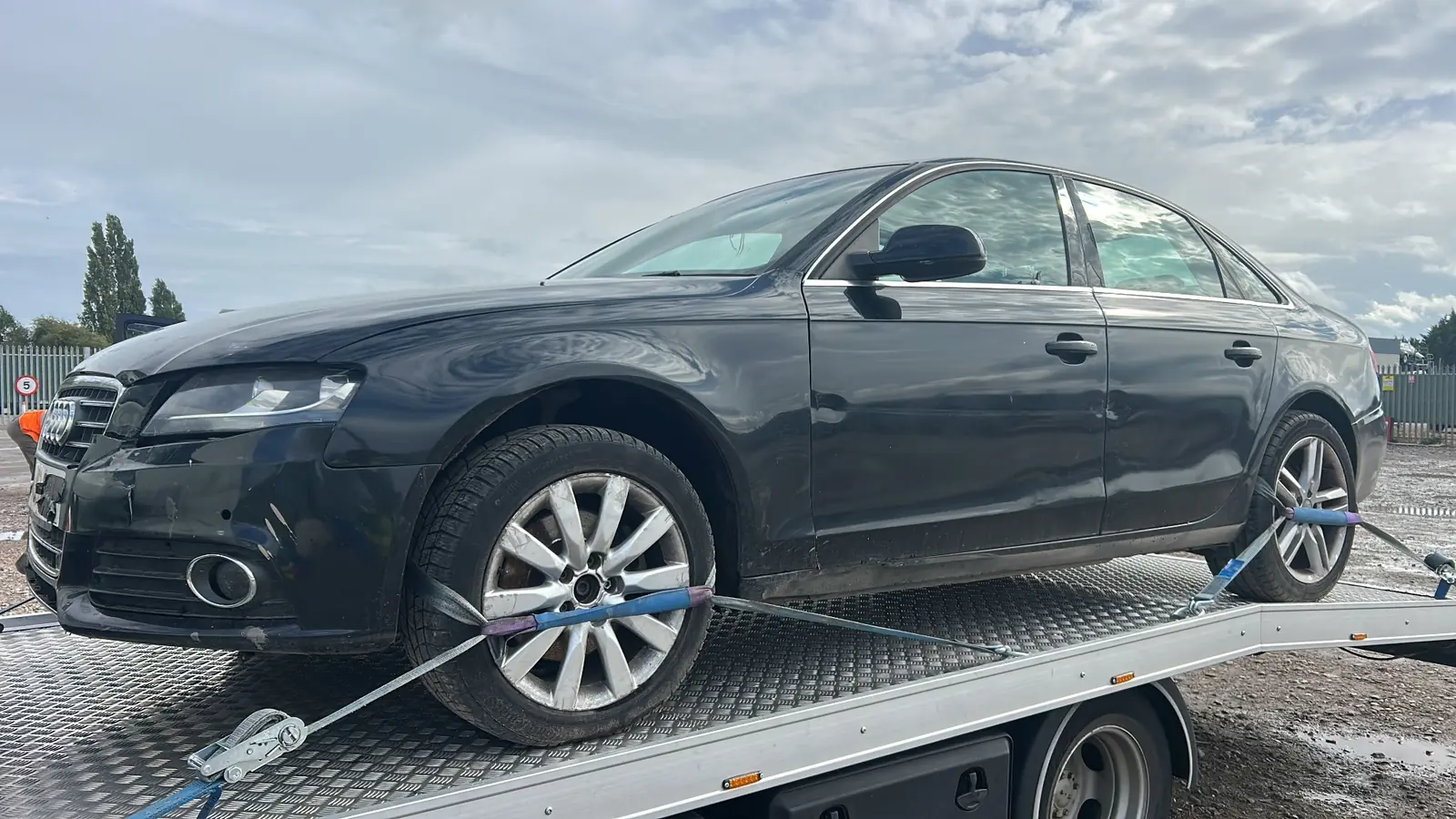
This Audi A4 is secured on a flatbed with visible front-end damage. Wheel condition, steering and loading access are checked before suitable M18 recovery equipment is arranged.
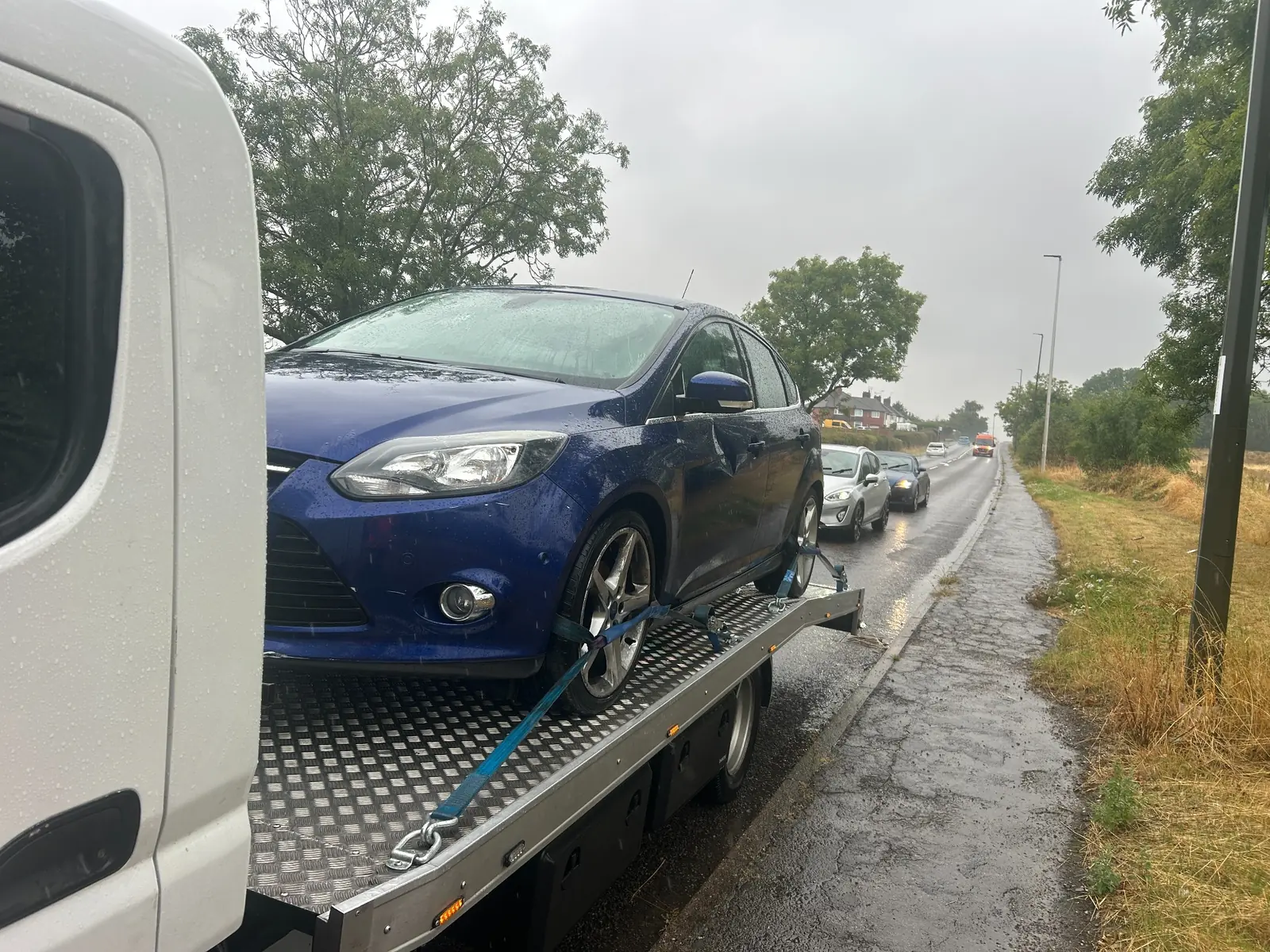
This Ford Focus is secured beside a rain-soaked road. Accurate M18 location details and a safe stopping place are important before a flatbed is dispatched.
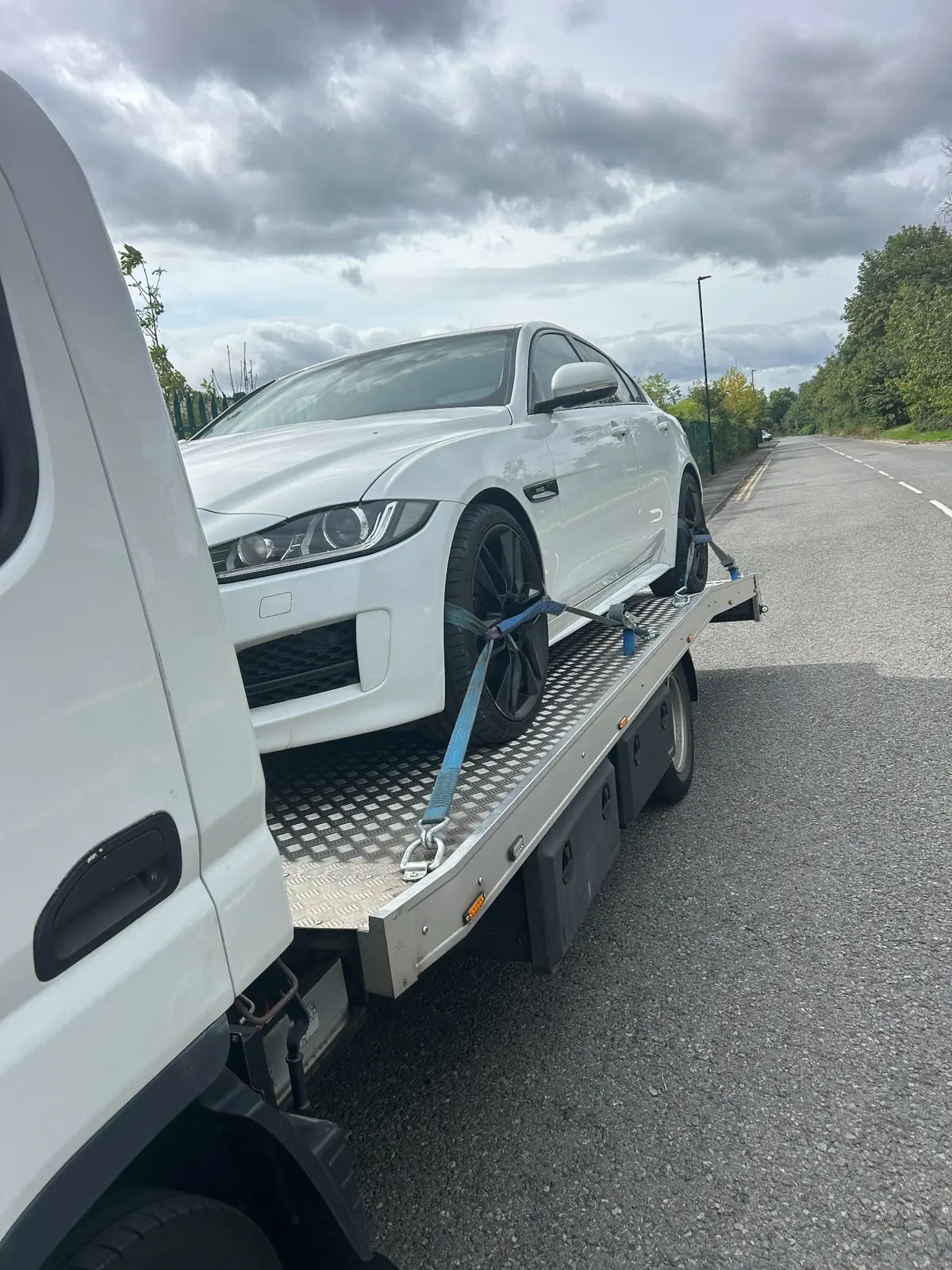
Low-profile saloons need careful ramp alignment and clear loading information so an appropriate M18 recovery truck can be selected.
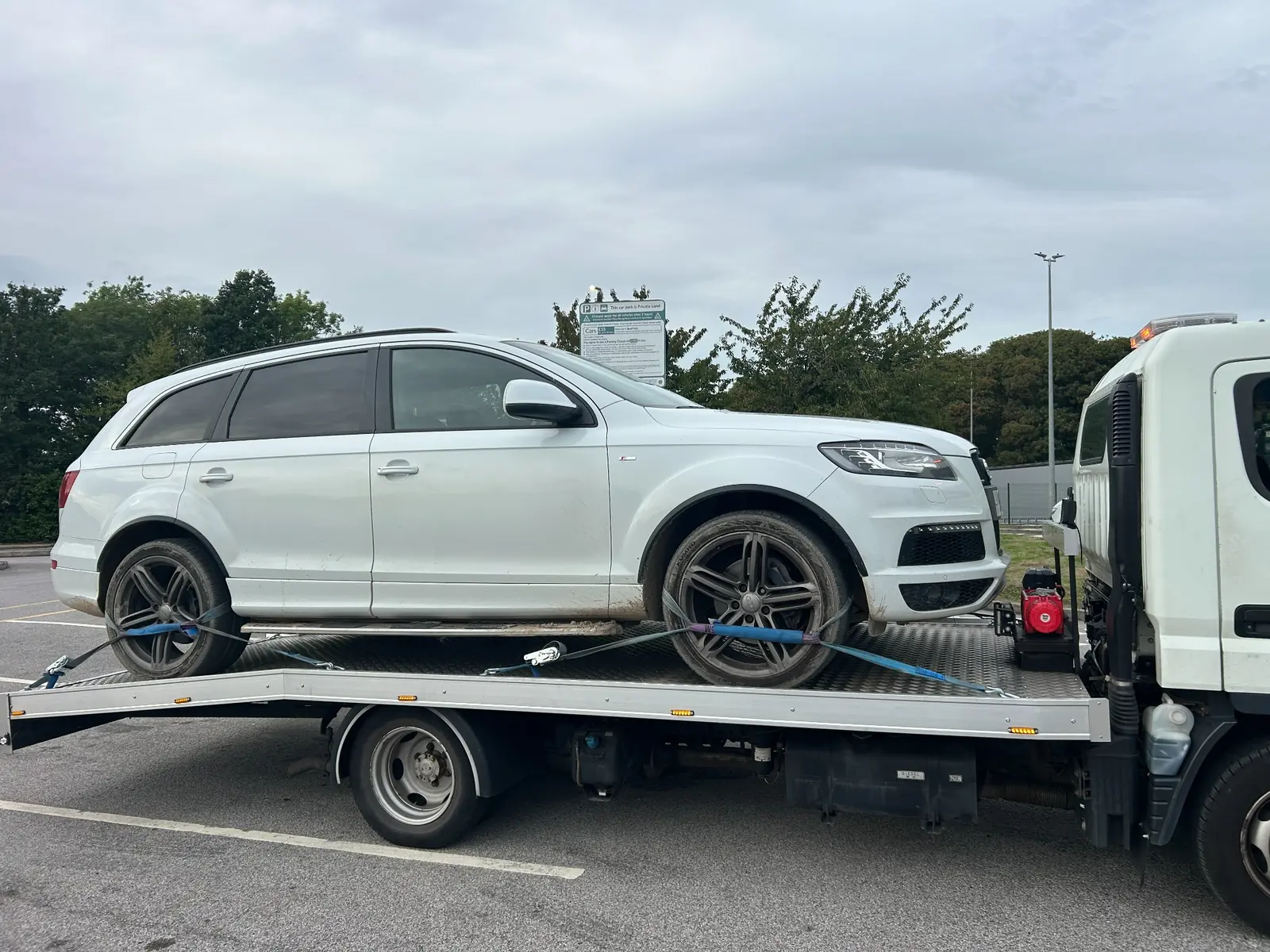
Larger SUV recovery requests require the vehicle size, wheel condition and running status to be checked before M18 dispatch.
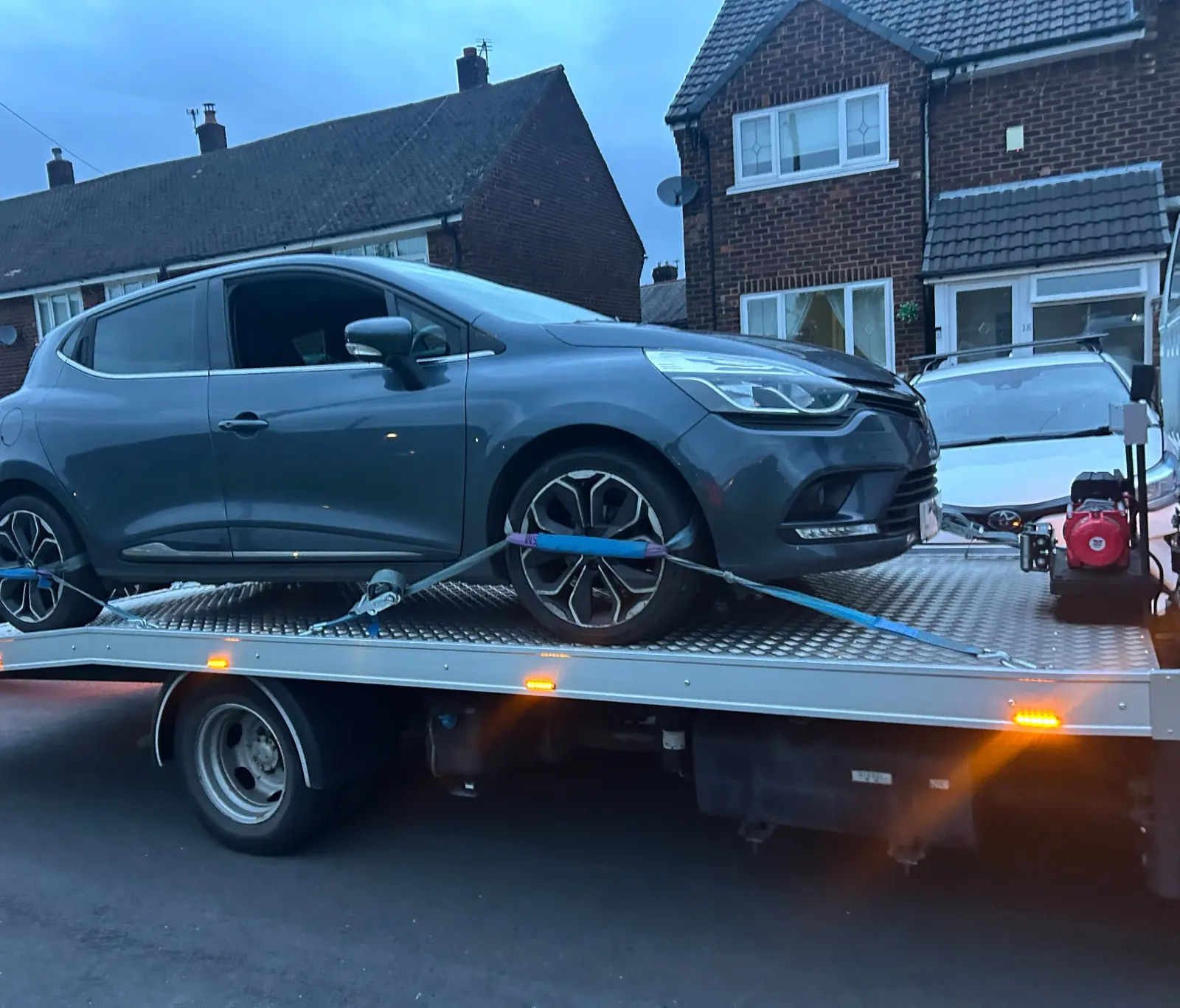
Evening M18 requests still need the exact pickup point, destination and vehicle condition before a price and estimated arrival time can be confirmed.
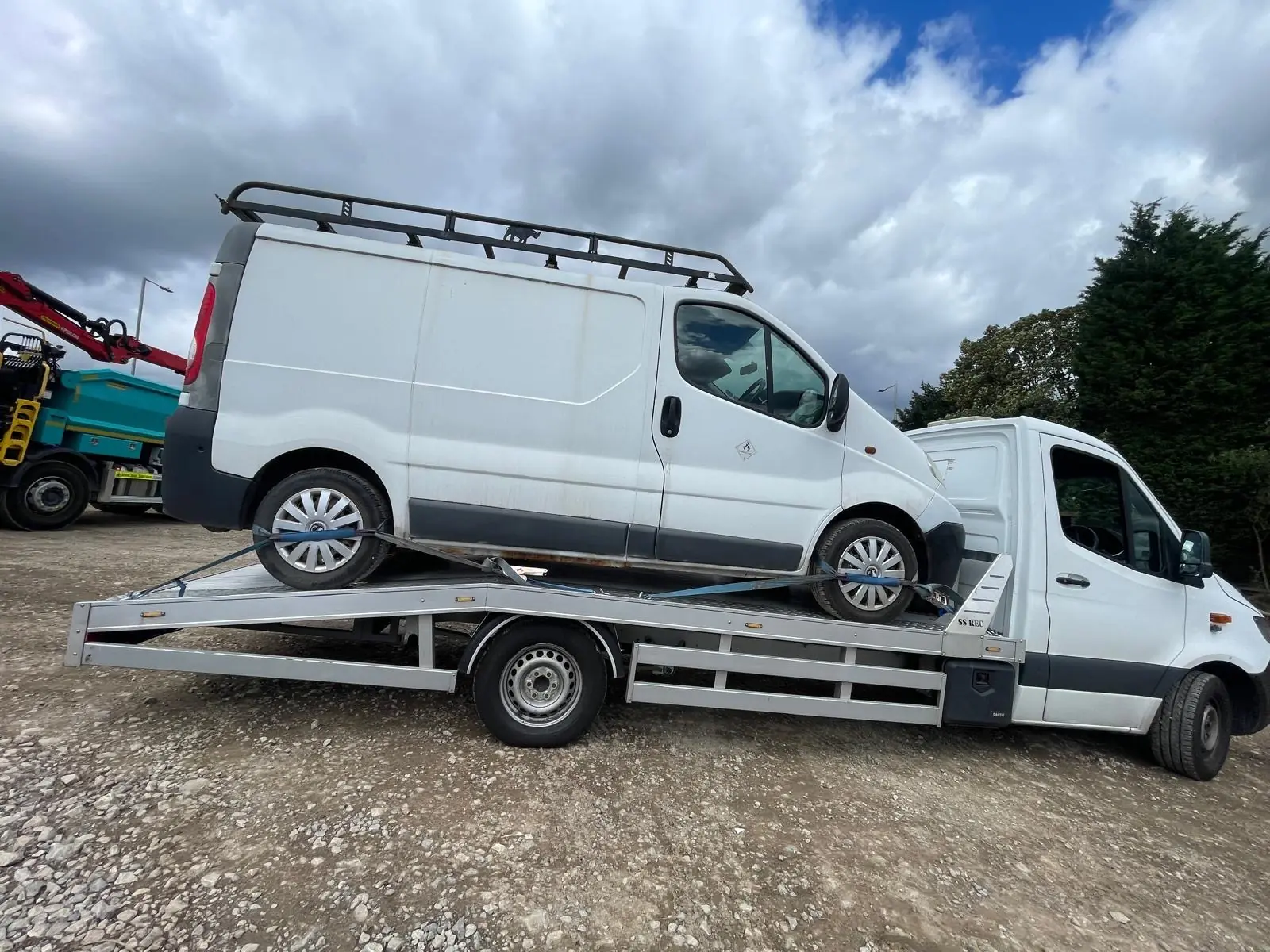
Van recovery is assessed using body length, load, vehicle weight and whether the van rolls safely for flatbed loading.
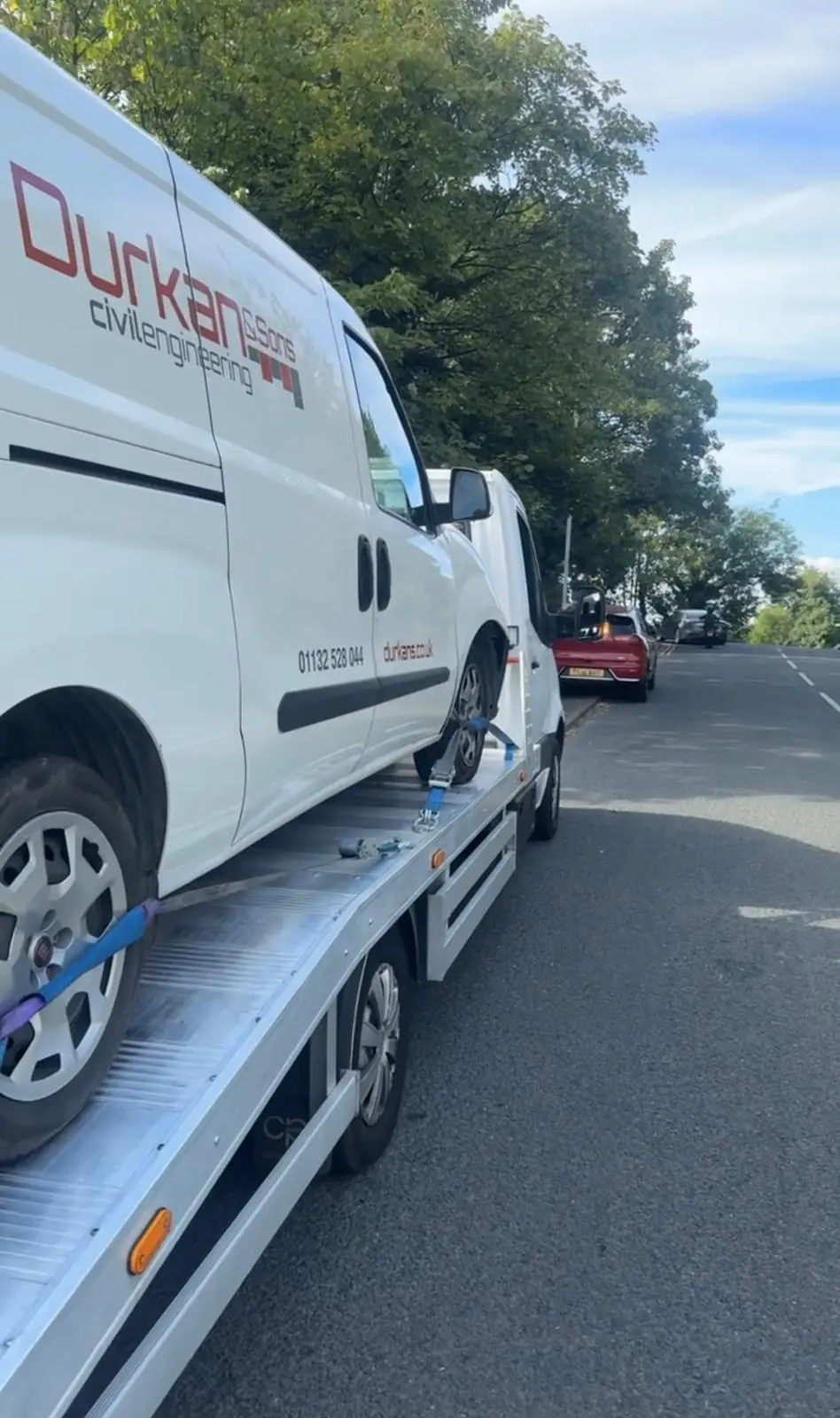
Sharing the van make, model, load status and wheel condition helps identify suitable M18 recovery equipment before dispatch.
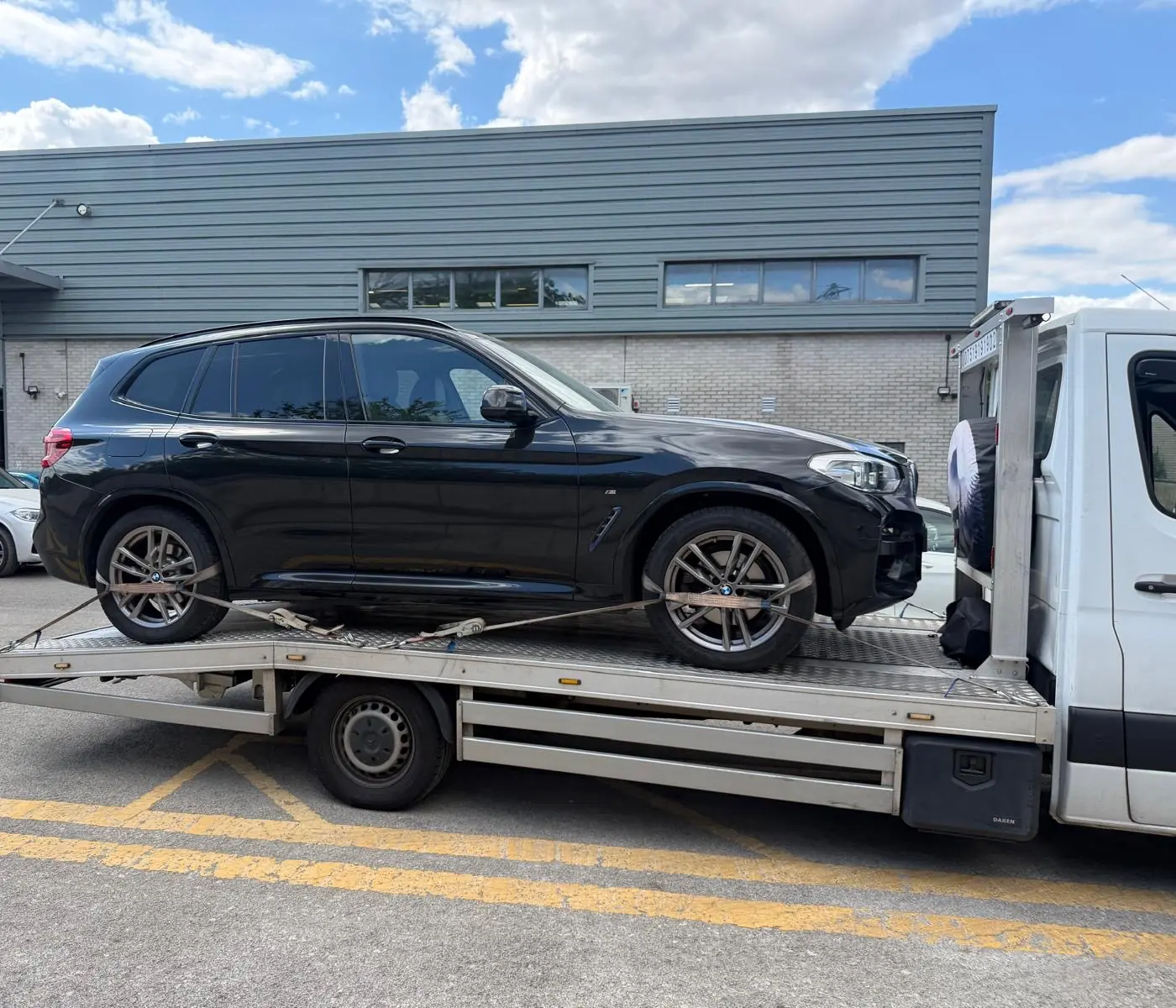
For SUV recovery, wheel restraint, vehicle dimensions and safe access all form part of the loading assessment.
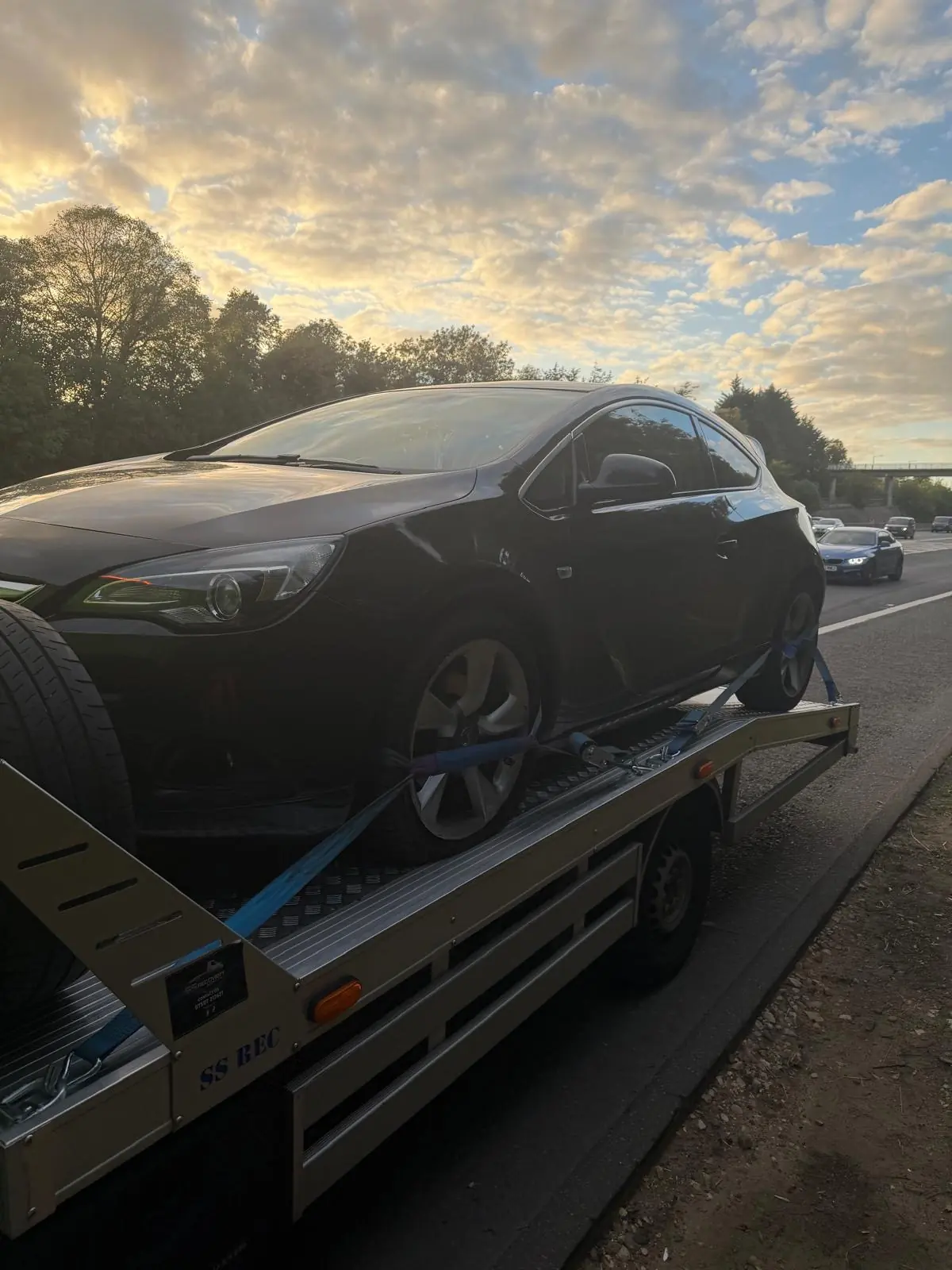
Roadside recovery is quoted after checking traffic-side safety, the precise M18 location and whether the car can roll and steer.
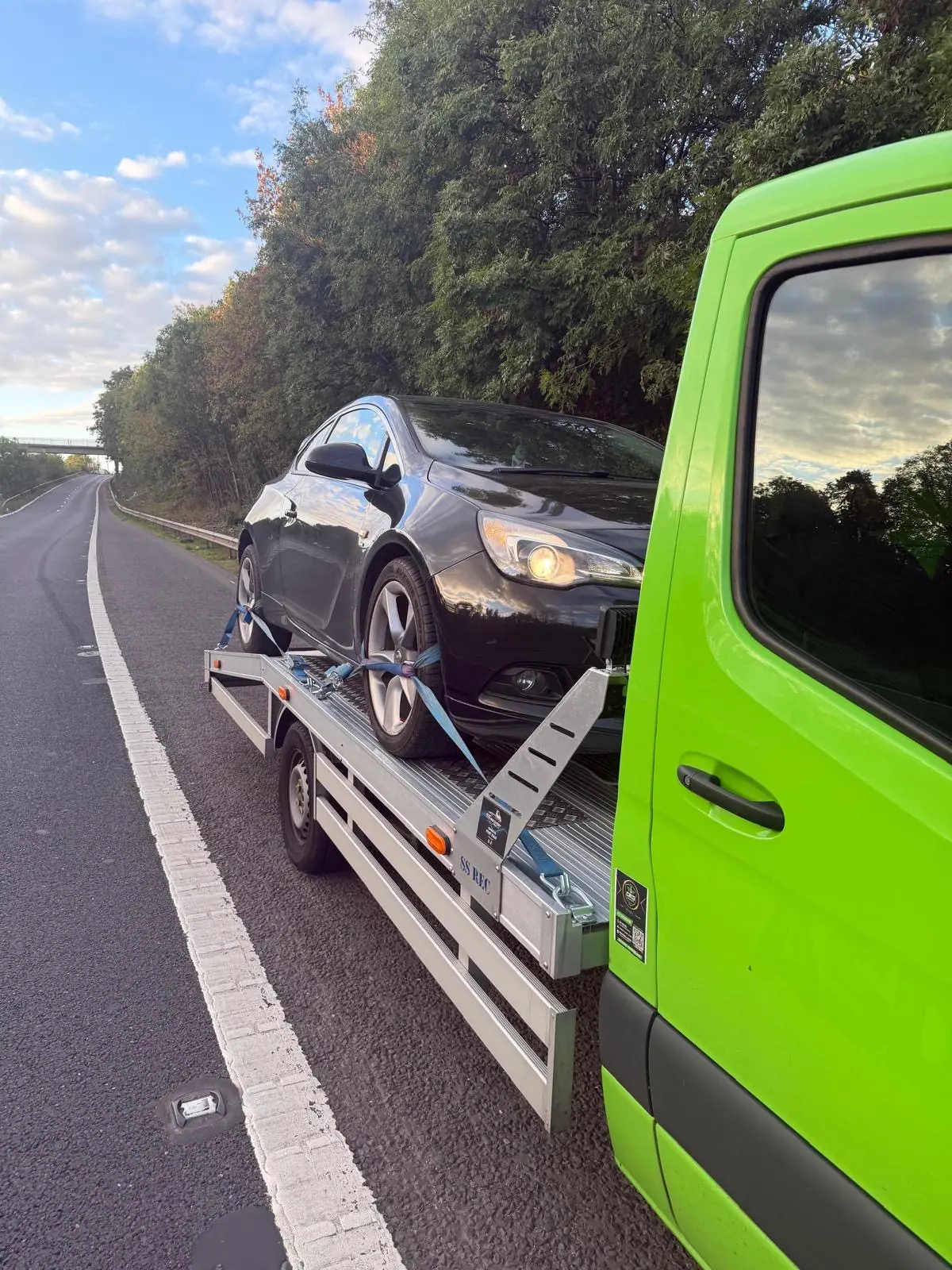
If a vehicle stops beside the M18, Motorway Response first needs confirmation that it is away from a live lane and safe for private recovery.
All 10 photographs are genuine examples of recent Motorway Response flatbed transport work. Equipment and truck type depend on the vehicle, access, wheel condition and operator availability.
M18 recovery questions
You can submit a recovery request for a safe location anywhere between the M1 near Rotherham and the M62 near Goole. Attendance depends on your precise position, vehicle and current suitable operator availability.
Doncaster North services is the signed motorway service area at M18 junction 5. If you are there, also send your position within the site and the direction from which you arrived.
Send your direction, nearest junction or services, pickup position, destination, vehicle details, wheel condition and whether the vehicle drives, rolls and selects neutral.
Often yes, but the damage must be explained before dispatch. Photos may be requested so suitable skates, winching equipment or another recovery method can be checked.
An ETA is provided only after checking a suitable operator’s current location and availability. Traffic, closures, scene safety and equipment requirements can affect arrival.
Keep your hazards on, remain belted if you cannot safely leave the vehicle, call 999 and ask for the police. Do not wait in a live lane for private recovery.
Safe and ready to request help?
A closer look at M18
The M18 route serves the Rotherham, Doncaster, Thorne, Goole corridor in England. The M18 connects the M1, A1(M), M180 and M62 corridors. Send the road number and direction from your actual stopping point rather than the next motorway you planned to join. A route page identifies the road to request; the precise collection still depends on the direction, actual carriageway and stopping position. A services name should include the side of the motorway, while a slip-road pickup needs its own location.
For car recovery, van recovery, SUV transport or motorcycle collection, send your current map pin from a place of relative safety if you can. Add the nearest junction or a driver location sign only when it is already visible. Do not walk along the motorway to find a postcode, inspect the vehicle or get a better photograph. A town beyond the next exit can help describe the journey, but it does not identify your pickup carriageway.
The cited source gives approximately 47.1 km (29.3 miles). Approximate mapped motorway network in DfT 2025 data. This is a mapped-network link total, including any branches, spurs or slip roads recorded under this road number; it is not an exact end-to-end driving distance. The all-direction AADF dataset has one record per link and year; opposite directions have not been added as separate lengths.
Sum of link_length_km once per unique motorway count_point_id for 2025; TM and PM categories only. A recovery journey also includes the approach to the correct carriageway and the onward delivery route, so the motorway’s length is not the mileage automatically used for your quote.
At junction 3 to junction 4, the official 2025 annual average daily flow is 53,425 motor vehicles across both directions. Of these, 31,904 are cars and taxis. The record is labelled Counted, count point 36592.
Annual average daily flow at this named count point, all directions combined, for 2025. This is not a live count, a count of unique cars across the whole motorway, or the number using the entire route in a particular 24 hours. Cars and taxis are a subset of all motor vehicles; flows from different count points have not been added together. DfT individual-link estimates are less robust than regional and national totals; the estimation method is shown. It should not be added to figures from other points to estimate unique motorway users: the same vehicle may pass several counters. Traffic volume alone also cannot predict your recovery truck’s arrival time. Understand daily traffic counts and road lengths.
Tell the team the make and model, transmission type, whether it runs and drives for loading, and whether any wheels are damaged, missing or locked. Known details about rolling, neutral and handbrake release help assess a non-runner. Do not test these beside traffic. A loaded van, large 4×4, low car or vehicle after a collision can need a different truck and securing method from a freely rolling small car.
Share the full destination address or postcode, passenger count and any known access restrictions. Recovery to a local garage and long-distance vehicle transport are different journeys. Suitable equipment, safe access, passenger space and available operators are checked before booking. Any change to your location, damage or destination should be reported before dispatch.
Vehicle, route and equipment
A M18 car recovery quote near Rotherham starts with the exact stopping point, destination and vehicle condition. The following overlapping examples explain our indicative pricing. They are not a fixed tariff, an all-inclusive package or a promise that every job will fall within the range.
| Indicative band | Example work assessed | What can change the quote |
|---|---|---|
| £120–£220 | Straightforward short-distance car collection from a safe, accessible pickup | Actual route, call-out timing, access and vehicle loading |
| £220–£350 | Longer car transport or a larger vehicle on an agreed route | Distance, weight, onward destination and operator availability |
| £350–£450 | Some van or SUV recoveries, or jobs needing additional loading equipment | Van size and load, locked wheels, ground clearance and damage |
| £450–£550 | Some longer-distance recoveries or more demanding transport arrangements | Overall journey, specialist handling and safe scene access |
These are examples rather than strict vehicle categories. A small car on a long route can cost more than a nearby SUV. Long-distance, heavy, complex, accident or specialist jobs can exceed £550. Tell us about a loaded van, trailer, missing keys, locked wheels or passengers before booking. The team confirms the actual price, scope and estimated arrival time before dispatch.
Police-arranged or statutory removal, storage, road-operator arrangements and any separately agreed charges are different from this private quote guide. Existing breakdown cover may also change who you should contact. Read the complete motorway recovery price guide or request a personal quote.
Route facts and practical help
Our indicative private recovery examples run from £120 to £550, depending on the actual route, vehicle size and condition, access and loading equipment. These are not fixed prices or a maximum; long-distance or specialist work can cost more. Your price and arrival estimate are confirmed before dispatch.
At junction 3 to junction 4, the official 2025 annual average daily flow is 53,425 motor vehicles across both directions. Of these, 31,904 are cars and taxis. The record is labelled Counted, count point 36592. The figure is not a total of unique vehicles using the whole motorway or today’s live flow.
Do not attempt a wheel change or other DIY repair beside motorway traffic. If you cannot reach safety or leave safely, keep your belt and hazards on and call 999 for the police. From a place of relative safety, contact the road operator or a recovery company and follow their instructions.
Practical recovery advice
Understand indicative motorway recovery prices from £120 to £550, what changes a towing quote, and how cars, vans, distance and loading affect the cost.
Read the guide ↗Motorway recovery guideUnderstand the Highway Code advice on hard-shoulder car repairs, the legal stopping rules, and when to contact police, the road operator or recovery.
Read the guide ↗Motorway recovery guideFlat tyre or blowout on a motorway? Read safe stopping advice, when to call 999, why to avoid a DIY wheel change and what to tell a recovery company.
Read the guide ↗Road facts & trafficUnderstand UK motorway daily traffic figures, cars and taxis, count locations and mapped road lengths. Read official-data notes before planning a recovery.
Read the guide ↗